
The Lost Books of the Odyssey
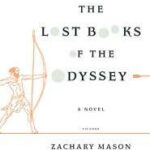
$17.00
| Title | Range | Discount |
|---|---|---|
| Trade Discount | 5 + | 25% |
- Description
- Additional information
Description
A New York Times Bestseller
A New York Times Book Review Editors’ Choice
Zachary Mason’s brilliant and beguiling debut novel reimagines Homer’s classic story of the hero Odysseus and his long journey home after the fall of Troy. With hypnotic prose, terrific imagination, and dazzling literary skill, Mason creates alternative episodes, fragments, and revisions of Homer’s original that, taken together, open up this classic Greek myth to endless reverberating interpretations. The Lost Books of the Odyssey is punctuated with great wit, beauty, and playfulness; it is a daring literary page-turner that marks the emergence of an extraordinary new talent.
This brilliant and beguiling debut novel reimagines Homer’s classic story of the hero Odysseus and his long journey home after the fall of Troy.
ZACHARY MASON is a computer scientist specializing in artificial intelligence. He was a finalist for the 2008 New York Public Library Young Lions Fiction Award. He lives in California.
1. The novel’s preface, delivered in the voice of a classics scholar, states that the forty-four variations “omit stock epic formulae in favor of honing a single trope or image down to an extreme of clarity.” How would you define that single trope? Which of the novel’s recurring images do you consider to be the most haunting?
2. The opening segment captures the power of the gods to inflict harm and to obscure reality. How do the characters respond to a world in which everyday life might be a mere illusion? Should we feel confident in reality?
3. How would you characterize the bond between Athena and Odysseus? What power do they wield over each other? What is unique about Zachary Mason’s approach to the relationships between gods and mortals?
4. Discuss the many versions of Telemachus presented in The Lost Books of the Odyssey. What facets of father-son relationships are presented?
5. What accounts for the endurance of tales related to the Trojan War? Why might the author have included a passage devoted to Alexander, and a medieval chapter (“Record of a Game”)? How does Mason’s approach compare to recent films inspired by Homer’s epics?
6. Consider the Odyssean aspects of reading this novel. How did you experience the multiple “guides” who led your journey? Which narrators did you prefer? What is the effect of the footnotes, and the premise that these chapters are translated from “pre-Ptolemaic papyrus excavated from the desiccated rubbish mounds of Oxyrhynchus”?
7. What do Penelope and Helen each reveal about the nature of marriage? How devoted would you have been to your husband if you had been dealt the fate of these women?
8. What images of Homer himself are presented within the text? How might he have reacted to Mason’s inventions?
9. How does Agamemnon’s rule as king compare to that of contemporary political and military leaders?
10. What truths about aging and wisdom are presented in the novel? How does the author balance a modern approach with the ancient mind-set of Troy’s defeat and its aftermath?
11. The author applied his expertise as a computer scientist to the broad structure of the novel. What other twenty-first-century techniques are evident? What was lost and gained by cultures whose storytelling mostly consisted of lyric poetry in an oral tradition?
12. Discuss the many versions of warriors who are presented in the novel, including Achilles’s appearance as a golem killing machine. How did ancient societies define “hero”? Does the Homeric impetus for war—a manifestation of meddling on the part of deities—appear, in some way, in modern discourse on war?
13. Which aspects of Homer’s Iliad and Odyssey were you most familiar with before reading this novel? Which reinventions by Mason amused you the most?
14. In the world of The Lost Books of the Odyssey, how does life for the female characters (gods and mortals alike) compare to that of men? What double standards exist? What surprisingly progressive ideals are in place?
15. What connections between the stories are evident? What threads are woven into the characters’ recurring struggles?
16. For centuries, Troy was considered to be a locale invented for ancient legends, but nineteenth-century excavations in Turkey confirmed the likely site of the walled city. Does the truth about the Trojan War matter? Is it all right to exchange accuracy for drama, delivering a rousing war story that makes its heroes immortal?
Reading Group Guide written by Amy Root / Amy Root’s Wordshop, Inc.
Bringing an ingenious new approach to the ancient tale of Odysseus, debut novelist Zachary Mason has crafted a mesmerizing work with The Lost Books of the Odyssey. Weaving together precisely drawn vignettes, fragments, and myths, Mason presents a reinvention of Homer’s original that offers rich, sometimes contradictory aspects of the timeless characters who have fascinated humanity’s imagination for centuries. In these pages, Achilles succumbs to a snake bite on the heel, a Cyclops can be a quiet farmer, and Odysseus reads about his own fate by discovering copies of The Odyssey and The Iliad among Agamemnon’s possessions. The goddess Athena shares the stage with Penelope in the hero’s heart and mind, and as his voyage takes him not only to Ithaca but also to the wisdom of his past, we too revel in this divine voyage.
The questions and discussion topics that follow are designed to enhance your reading of Zachary Mason’s The Lost Books of the Odyssey. Whether you embark on this journey on your own or with your book club, we hope this guide will enrich your experience.
“[A] dazzling debut . . . Stunning and hypnotic . . . Mr. Mason . . . has written a series of jazzy, post-modernist variations on the Odyssey, and in doing so he’s created an ingeniously Borgesian novel that’s witty, playful, moving and tirelessly inventive . . . This is a book that not only addresses the themes of Homer’s classic–the dangers of pride, the protean nature of identity, the tryst between fate and free will–but also poses new questions to the reader about art and originality and the nature of storytelling.” —Michiko Kakutani, The New York Times“Zachary Mason has achieved something remarkable. He’s written a first novel that is not just vibrantly original but also an insightful commentary on Homer’s epic and its lasting hold on our imagination.” —John Swansburg, Slate.com“Mason has a big heart beneath all his narrative trickery, and he uses it to bring a contemporary sensitivity to the myths.” —Jeremy McCarter, Newsweek“Jubilant in execution. Perverse and irreverent.” —Katherine A. Powers, The Boston Globe“Mason’s prose is finely wrought….His imagination soars and his language delights.” —Adam Mansbach, The New York Times Book Review“Clever, compelling, and often poignant…Mason’s puckishly archaic diction, a wiseacre’s revision of Richmond Lattimore with swing and jazz, is such a pleasure.” —Jesse Berrett, San Francisco Chronicle“Marvelous…The stories’ wonderful variety reflects the cunning, resourceful character of Odysseus himself.” —Timothy Farrington, The Wall Street Journal“An absolute delight.” —Alan Cheuse, NPR’s All Things Considered“[The Lost Books of the Odyssey] is, to my surprise, a wonderful book. I had expected it to be rather preening, and probably thin. But it is intelligent, absorbing, wonderfully written, and perhaps the most revelatory and brilliant prose encounter with Homer since James Joyce.” —Simon Goldhill, The Times Literary Supplement“A subtle, inventive, and moving meditation on the nature of story and what Louis MacNeice calls ‘the drunkenness of things being various.’ ” —John Banville, Booker Prize–winning author of The Sea
“Spellbinding. In his versions of these ancient myths, Mason twists and jinks, renegotiating the journey to Ithaca with all the guile and trickery of Odysseus himself. Rarely is it so reassuring to be in the hands of such an unreliable narrator.” —Simon Armitage, author of The Odyssey: A Dramatic Retelling of Homer’s Epic
“A stirring revelation: Zachary Mason’s astounding glosses of the Odyssey plunge us into an unforeseeable and hypnotic dimension of fiction. Of the three possible interpretations of the work that he proposes–Homeric stories anciently reproduced by recombining their components, a Theosophist dream of abstract mathematics, and pure illusion (that is, it was all made up by him)–the result is one and the same. This enthralling book is his doing, whether as translator, conjuror, or author. I vote for number three.” —Harry Mathews, author of My Life in CIA
“Mason’s delightful, inventive collection takes the raw materials of Homer–wily Odysseus, faithful Penelope, wrathful Poseidon–and then recombines, warps and twists elements of his well-worn tale.” —Philadelphia City Paper“Mason’s fantastic first novel, a deft reimagining of Homer’s Odyssey, begins with the story as we know it before altering the perspective or fate of the characters in subsequent short story–like chapters . . . This original work consistently surprises and delights.” —Publishers Weekly (starred review)“These imaginary lost books of The Odyssey enhance Homer’s epic tale with alternative scenarios and viewpoints. A finalist this year for the New York Public Library’s Young Lions Award, Mason employs clear, crisp prose and a clever sense of humor to propel the action briskly . . . A paean to the power of storytelling.” —Library Journal“Though none of these brilliantly conceived revisions fits neatly into Homer’s classic poem, each resonates with something of the artistic vigor of the ancient original . . . A daring and successful experiment in fictional technique.” —Booklist“[A] literary adventure in which everything–the hero, the author, even the reader–is up for grabs . . . The epic as kaleidoscope.” —Kirkus Reviews“Reading Zachary Mason’s forthcoming The Lost Books of the Odyssey, I’ve been in danger of missing my subway stop . . . Funny, spooky, action-packed, philosophical–the mood keeps shifting, and you keep wanting to read just one more.” —Barnes and Noble Review
Additional information
| Dimensions | 1 × 145 × 8 in |
|---|