

Save the…Tigers
$15.99
| Title | Range | Discount |
|---|---|---|
| Trade Discount | 5 + | 25% |
- Description
- Additional information
Description
Introduction: Why Study Ethics?
1. Moral Sentiment.
2. Autonomy and Strength of Will.
3. Virtue and Vice.
4. Wisdom.
5. Moral Knowledge.
Epilogue: Moral Competence.
Appendix: Writing Ethics Term Papers.
Glossary.
References.
Index.
For any Introductory Ethics course.
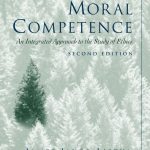
Moral Competence takes an integrated approach to the study of ethics. It shows how various concepts, issues, approaches, and theories play an important part in understanding the whole of moral life. Text is designed to show how moral emotions, sentiments, autonomy, strength of will, virtues, moral reasoning, and ethical principles contribute to a comprehensive understanding of moral life.
Moral Competence is a readable, relevant, and uniquely designed text that integrates the most important aspects of ethical conduct into a complete picture of moral life. Drawing on the various traditions in the study of ethics, the text examines the nature of moral sentiment, free will, responsibility, and autonomy. It includes a discussion of a number of the important virtues, an account of wisdom and moral decision making, and an analysis of classical and contemporary moral principles. Case studies, news stories, queries, fiction and film synopses, and dozens of contemporary issues are used to illustrate concepts and theory, and engage the student in reflection on a number of themes. Some of the significant features of the second edition of Moral Competence are:
- the use of a variety of ethical traditions, approaches and theories.
- the inclusion of both traditional and current issues and topics.
- dozens of case studies on a wide range of ethical issues.
- the use of news stories and real-life examples to illustrate ethical concepts and problems.
- story and film summaries that can be used for discussion.
- over 40 information boxes providing interesting, relevant, humorous, and sometimes shocking material for reflection.
- biography boxes on the lives of principal philosophers and summaries of their thought.
- a number of illustrations of key concepts and ideas.
- access to PowerPoint presentations, updates, practice quizzes, study guides, and other Web-based materials.
- an appendix on writing ethics papers, with online references, and a comprehensive list of ethics journals and newsletters.
- a glossary of basic terms.
“All the basic topics are covered very well-better than any other text ! have ever used. It is rare to find all five of the topics treated ,so thoroughly in one text ….” — Mary Giegengack-Jureller, LeMoyne College
- NEW – Revised and updated sections on moral emotions, moral education, free will, responsibility, moral vision, happiness and flourishing, deliberation, wisdom, practical reasoning, the justification of moral principles, and their use in moral decision-making.
-
Keeps students current with contemporary moral problems. Ex.___
-
- NEW – New material on the issue of moral decline, casuistry, narrative ethics, responsibility and liability, evolutionary ethics, rights-based ethics, and natural law theory.
-
Canvasses numerous ethical approaches to assist in students’ decision making. Ex.___
-
- NEW – New and updated case studies, examples, illustrations, film and fiction summaries, queries, and news stories, drawn from current events and issues; photographs and biographies of the principal philosophers.
-
Offers students a wide range of updated, interesting sources for moral reasoning. Ex.___
-
- Complete and comprehensive account of moral life—Using both classical and current sources.
-
Provides students with the benefit of the larger picture, and a better understanding of morality. Ex.___
-
- Case studies, news stories, film and fiction summaries, queries, and information boxes—Help illustrate and enhance the textual material.
-
Helps students gain a feeling of real relevance of the material to everyday life. Ex.___
-
- PowerPoint Presentations and web-based materials.
-
Allows instructors to utilize online resources for class use, and students to follow the material in class, as well as use these slides to review for a test or quiz. Ex.___
-
- Revised and updated sections on moral emotions, moral education, free will, responsibility, moral vision, happiness and flourishing, deliberation, wisdom, practical reasoning, the justification of moral principles, and their use in moral decision-making.
-
Keeps students current with contemporary moral problems. Ex.___
-
- New material on the issue of moral decline, casuistry, narrative ethics, responsibility and liability, evolutionary ethics, rights-based ethics, and natural law theory.
-
Canvasses numerous ethical approaches to assist in students’ decision making. Ex.___
-
- New and updated case studies, examples, illustrations, film and fiction summaries, queries, and news stories, drawn from current events and issues; photographs and biographies of the principal philosophers.
-
Offers students a wide range of updated, interesting sources for moral reasoning. Ex.___
-
Additional information
| Weight | 7.9504 oz |
|---|---|
| Dimensions | 0.6300 × 5.6300 × 8.0000 in |
| Imprint | |
| Format | |
| ISBN-13 | |
| Author | |
| Subjects | nature gifts, tigers, tiger books, geography for kids, animal gifts, non fiction books for kids age 7-9, non fiction books for kids age 5-8, cat books for kids, nonfiction books for kids 6-8, earth day books, animal books for kids ages 6-8, animal facts books for kids, endangered animals, JNF003270, earth day books for kids, science books for kids, cats, biomes, earth science, endangered species, science books, ecology, JNF037020, earth day, recycling, global warming, earth, climate change, animal books, books for kids 5-7, Animals, environment |
| Audience | |
| BISAC |