

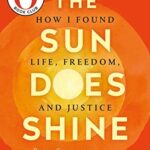
The Sun Does Shine
$17.99
| Title | Range | Discount |
|---|---|---|
| Trade Discount | 5 + | 25% |
- Description
- Additional information
Description
The New York Times bestseller and Oprah’s Book Club 2018 Selection.
Winner of the 2019 Moore Prize
Finalist, Dayton Peace Prize, 2019
“An amazing and heartwarming story, it restores our faith in the inherent goodness of humanity.”
– Archbishop Desmond TutuA powerful, revealing story of hope, love, and justice.
In 1985, Anthony Ray Hinton was arrested and charged with two counts of capital murder in Alabama. Stunned, confused, and only twenty-nine years old, Hinton knew that it was a case of mistaken identity and believed that the truth would prove his innocence and ultimately set him free.
But with no money and a different system of justice for a poor black man in the South, Hinton was sentenced to death by electrocution. He spent his first three years on Death Row at Holman State Prison in agonizing silence—full of despair and anger toward all those who had sent an innocent man to his death. But as Hinton realized and accepted his fate, he resolved not only to survive, but find a way to live on Death Row. For the next twenty-seven years he was a beacon—transforming not only his own spirit, but those of his fellow inmates, fifty-four of whom were executed mere feet from his cell. With the help of civil rights attorney and bestselling author of Just Mercy, Bryan Stevenson, Hinton won his release in 2015.
With a foreword by Stevenson, The Sun Does Shine is an extraordinary testament to the power of hope sustained through the darkest times. Destined to be a classic memoir of wrongful imprisonment and freedom won, Hinton’s memoir tells his dramatic thirty-year journey and shows how you can take away a man’s freedom, but you can’t take away his imagination, humor, or joy.
ANTHONY RAY HINTON spent nearly thirty years on death row for crimes he didn’t commit. Released in April 2015, Hinton now speaks widely on prison reform and the power of faith and forgiveness. He lives in Alabama.
THE SUN DOES SHINEBy Anthony Ray Hinton with Lara Love Hardin
A Reading Group Gold SelectionABOUT THE AUTHOR· A Conversation with Anthony Ray Hinton
KEEP ON READING· Reading Group Questions
ABOUT THE AUTHOR [margin text]
A Conversation with Anthony Ray Hinton [section head]
What books did you read while in prison?· I Know Why the Caged Bird Sings—Maya Angelou
· Go Tell It on the Mountain—James Baldwin
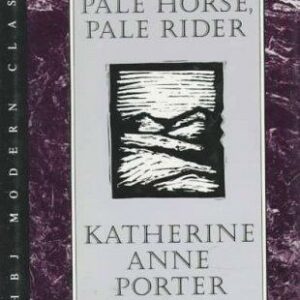
· To Kill a Mockingbird—Harper Lee
· Your Blues Ain’t Like Mine—Bebe Moore Campbell
· Uncle Tom’s Cabin—Harriet Beecher Stowe
Starting the book club was a way to help the other men on the row focus on anything other than death. Books have always been a poor man’s transportation to travel the world. I had never made it to college, but I still had more education than a lot of the guys. I loved learning. I loved pondering a big idea or a philosophical question. I loved seeing the world through other people’s eyes and that’s what books did for me. I can’t say specifically what moved me or the other guys about a particular book—but they all transported us. They took us away from our own lives and into the cities and towns of the characters in the pages. The books we read gave us a mirror to the divide between black and white we had all experienced in one way or another—even Henry Hays—and also gave us a new language to express it in. We all saw ourselves in the books we read, and we hung on to those stories and passed them around like contraband because they were a doorway that led us out of our five-by-seven cells, out of the prison library, and into a place that existed somewhere between the reality of our life and our death.
What three things (or people) helped you get through your time in prison?Without a doubt, my imagination was the number one thing that helped me survive thirty years in hell. It’s a struggle to get your mind right and keep your sanity when you are on death row—but I think it’s even harder to do that when you know you are innocent. I can’t speak for others, but when you are in a living, waking nightmare, you have to have a way to escape in your imagination. The State of Alabama could tell me what to wear, when to eat, when to sleep, and they could take away my name and give me a number. They controlled every single moment of how I spent my life for thirty years. The one thing that belonged to me—that I had complete control of—was my own mind. My imagination. My perspective. My experience of reality. They couldn’t lock up my mind. Or control it. Or threaten to kill it. My soul and my imagination were God-given and no one could touch those. In prison, how you do your time is how you live. You can fight and resist against every second of the clock and day on the calendar—or you can transcend time and space. It may sound crazy, but I was able to transcend time and space. As far as I was concerned, Alabama had kidnapped me and were holding me prisoner. I hadn’t done anything wrong. I learned, as many trauma victims do, to purposefully disassociate myself from my experience. I mean, I’m no psychologist—but I am a survivor.
The other “thing” that got me through three difficult decades was my humor. When I am laughing or making others laugh, it lifts my spirit up. It’s another form of transcendence. By nature I am a joyful person, and hearing laughter in hell is its own kind of justice.
Looking forward to Lester’s visits also helped me mark and pass the time. The hours I spent with my best friend reminded me of who I was and where I was from and even where I belonged. Time with Lester has been simple and easy and meaningful since we were boys. Having a constant presence of someone who believed in me helped me endure. Lester wasn’t an imaginary friend—he was flesh and blood and friendship and faith. His unwavering support steadied me. Year after year after year. I could never adequately put into words how Lester saved my life. Friendship can be even more powerful than family because the bond is built on time and experience and a million different moments. Blood is blood, but friendship is a choice.
Ultimately how I got through changed day to day. Some days it took more faith; other days it took focusing on another man’s problems or spending time hearing the stories of the other men. The “monsters” on death row were once children who needed play and hope and love and stability just like you and I. Many of them never got those things. It doesn’t justify their actions later in life, but there was more to each man than the worst thing they had done.
Some days I passed my time finding out what that was.
How do you spend your time since leaving prison? What are your hobbies?Since I’ve left prison I spend my time feeling the rain on my skin, walking for miles at a time just because I can, cooking and eating delicious food, and of course, watching sports, which I have always loved and always will (I have more Auburn gear than you could even imagine). But the majority of my time is spent talking about my experience on death row and doing everything I can to make sure that innocent men and women are not put to death. I do not believe we have a moral or a legal right to take a life—not even in exchange for another life. Murder is wrong—even when you are the State or doing it for the people.
I get asked all the time if I have gotten a girlfriend since my release and the answer is no. I’m open to dating and I’m also still waiting for Sandra Bullock or Halle Berry to read the book and give me a call. Sometimes I wonder about the woman I would have married and the children I would have had if I have not been wrongfully incarcerated. It’s too painful to think about sometimes. I imagine teaching my sons or daughters to play baseball just like I imagine having worked for thirty years and being able to retire. The truth is, my life was stolen away and my children were kidnapped before they had a chance to be born. You can’t measure what the State of Alabama stole from me in years or even decades—it can only be measured in generations. I wasn’t put to death, but the potential of my children, and my grandchildren, and the entire legacy of my existence was killed on death row.
Some days I spend my days grateful to be free and determined to inspire and help, and other days I spend grieving what was lost.
What is one thing you wish you could say to young Ray after his death sentence was handed down?I would tell him that hope is a choice, and to pace himself. I don’t think I would tell him that it was going to take thirty years for the truth to be known. Some things are easier to endure if you believe they will be over at any moment. I would tell young Ray that his mind is stronger than he knows. I would also tell him that someday he will share his story in a book, so write down everything he can so it’s not so painful to relive later. I would probably also tell him that he was going to meet Oprah.
Should the death penalty be abolished?Absolutely! The death penalty doesn’t deter crime and as I said, killing, of any kind, is wrong. It’s a broken system. It’s a barbaric system. It’s not a system that elevates humanity. My faith tells me not to kill. I don’t remember hearing anything about that being conditional.
What was your first thought when you learned you were going to be released from prison?Because it was April Fools’ Day, I thought at first it was a practical joke. But I knew Bryan Stevenson wasn’t a practical joker, so I couldn’t quite understand what I was hearing. I fell to the floor. There are no words and there were no thoughts. Imagine holding your breath for thirty years. I didn’t think. I finally exhaled.
Do you keep in touch with any inmates you lived with in prison?I have tried to reach out to some of the men, but I don’t want to say their names here because I believe that the prison is not allowing my letters. It is my greatest wish that now that there is a paperback of my book, it can be sent to every single man and woman on death row in this country and every single person in prison around the world. My message to the men at Holman is the same as my message to you—life is short. Forgive. Keep your faith in truth, in goodness, and in the ability of people to change. And hope is a light that can never be extinguished, no matter where you are.
What can people do to aid prisoners who have been wrongfully convicted?Well, first of all, we can all work for social justice and to create a judicial system that does not sentence you based on your income or your skin color. We can vote for politicians who believe that we have a broken system in need of reform and are willing to acknowledge the broken pieces and repair them. I believe that we need a system that gets to the root cause of criminality and leads with the belief that people can be rehabilitated and that every single life is worthwhile.
When men and women are exonerated and released from wrongful incarceration, they need support to transition back to noninstitutional life. They don’t need cameras in their faces; they need help getting a driver’s license, a job, and a safe place to live. They need help reintegrating into a quickly changing technological world. They need compensation for the years they lost. They need to know they are valued.
Don’t we all?
KEEP ON READING [margin text]
Reading Group Questions [section head]
“I forgive because not to forgive would only hurt me.” —Ray Hinton
1. Before being wrongfully convicted and sentenced to death, Anthony Ray Hinton was in trouble with the law for stealing a car. Does this in any way make you less sympathetic to his plight?
2. Discuss the friendship of Ray and Lester. Can you imagine a friend who would visit you every visiting day for thirty years? What does their relationship teach us about friendship?
3. What did you think of the friendship of Ray and fellow inmate Henry Hays, who was raised in a family of virulent racists? What does this friendship teach us about love and hate?
4. Do you think the death penalty system is broken? How would you like to see it changed?
5. The State of Alabama has not apologized or compensated Ray Hinton for his wrongful imprisonment. Do you think he should be paid? Some say he shouldn’t be paid because he was never proven innocent. What do you say to this argument?
6. Ray and Bryan Stevenson, his lawyer, both say that nobody is defined by the worst thing they have ever done. Do you agree? Does this help you have more compassion for those incarcerated or on death row?
7. What was the turning point for Ray in how he would survive in prison? What does this teach you?
8. What personal qualities help Ray not only to survive prison, but actually make a positive impact around him?
9. How would you like to see our prison system reformed? What programs would be beneficial to our society, and why?
10. Do you think Ray Hinton should have forgiven those who wronged him? If you were greatly wronged, could you forgive? Do you believe there are situations in which forgiveness is not the right solution?
11. Ray spent his first three years on death row without speaking. When is silence the loudest form of expression? Have you found moments in your own life when silence was more powerful than speech?
12. Ray states that “spending your days waiting to die is no way to live.” What are some ways that you practice living, not merely existing? Where do you draw the line between the two?
13. What is the role of faith in The Sun Does Shine? Does Ray Hinton’s questioning of his own faith strengthen or diminish it? What if Ray Hinton had not believed in God at all: do you think that would have affected his ability to sustain himself?
14. Along with his friend Lester, Ray Hinton’s mother was his most faithful visitor and supporter. If you were accused of a terrible crime, would you expect support from your family and best friend? If someone you loved were accused, would you offer that support?
15. Ray Hinton founded a book club on death row, reading books by James Baldwin, Maya Angelou, and others. If you were confined with a group of people, whether incarcerated or in another circumstance, what books would you want to read for a book club?
16. Some books about the worst of life—Elie Wiesel’s Night, Maya Angelou’s I Know Why the Caged Bird Sings, Jeannette Walls’s The Glass Castle—endure as inspirational classics. Why do people find hope in such stories? Does The Sun Does Shine make you feel angry or hopeful?
“Nelson Mandela spent 27 years in prison for opposing a racist system in South Africa. Anthony Ray Hinton spent 30 years on death row because a racist system still exists in America. Both emerged from their incarceration with a profound capacity to forgive. They are stunning examples of how the most horrendous cruelty can lead to the most transcendent compassion. The Sun Does Shine is both a cautionary tale for all who think that a great nation can easily forget its past and inspiring proof of the inability to condemn a man’s capacity for hope, love, and joy. An amazing and heartwarming story, it restores our faith in the inherent goodness of humanity.” – Archbishop Desmond Tutu
“No one I have represented has inspired me more than Anthony Ray Hinton and I believe his compelling and unique story will similarly inspire our nation and readers all over the world.” – Bryan Stevenson, New York Times Bestselling Author, Just Mercy
“If there is ever a story that needs to be told, it is this one. Anthony Ray Hinton is extraordinary, an example to us all of the power of the human spirit to rise above complete injustice. He is using his experience as a way to turn the broken criminal justice system upside down. He is a brilliant storyteller, and his book will make people laugh, cry, and change their own lives for the better. It will also inspire people to never accept the unacceptable, like the death penalty. The Sun Does Shine will be a book that people all around the world will never forget.” – Richard Branson
“I’ve met Anthony Ray Hinton, and he’s an extraordinary man. He stands out among exonerees (and I know hundreds of them) for his dignity and gentle soul encased in his massive frame. His story is important and compelling. Bryan Stevenson, a national treasure and central character in this story, fought tirelessly for over fifteen years and won a rare and landmark case in the United States Supreme Court. The Sun Does Shine is the gripping and inspirational story that the public has been waiting for.” – Barry Scheck, Attorney, Director of the Innocence Project
“[The Sun Does Shine], collaboratively written with Hardin, is a troubling, moving, and ultimately exalting journey through the decades Hinton lived under the threat of death while an unjust system that refused to acknowledge mistakes failed him repeatedly.” – Booklist, starred review
“A memoir of spectacular grace…as moving and inspiring as memoirs get.” – Garden & Gun
“An urgent, emotional memoir from one of the longest-serving condemned death row inmates to be found innocent in America. … A heart-wrenching yet ultimately hopeful story about truth, justice, and the need for criminal justice reform.” – Kirkus, starred review
“In this intense memoir, [Anthony Ray] Hinton recounts his three-decade nightmare: awaiting execution for crimes he didn’t commit. … Hinton’s life is one of inspiration, which he wonderfully relays here in bitingly honest prose.” – Publishers Weekly, starred review
“A testament to the power of faith and the strength of hope, The Sun Does Shine is an unforgettable and timely read that illuminates the long overdue need for criminal justice reform in America.” – Bustle
“This powerful memoir is testament to a man who survived against all odds and showed how powerful the human spirit can be.” – The Malestrom
“Hinton’s ability to speak about the injustices he faces with such poise and composure is his greatest gift.”
– The Harvard Crimson
“A must for anyone involved in criminal justice. Suggested reading for anyone interested in learning more about death row and its horrors.” – Library Journal, starred review
“The Sun Does Shine could be the most impressive book you’ll lay eyes on.” – Houston Style Magazine“Illuminating and emotionally powerful, simple and complex, and destined to become a classic in American prison literature.” – The Pittsburgh Post-Gazette
“A shatteringly beautiful memoir…[Hinton’s] message is ultimately like a cold shower that sobers you up to the reality of injustice in the legal system, while also lifting you up as you consider the resilience of the human spirit.” – Lupita Nyong’o
Additional information
| Weight | 1 oz |
|---|---|
| Dimensions | 1 × 6 × 210 in |