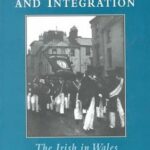
Immigration and Integration: The Irish in Wales, 1798-1922 is the first book-length study of the Irish in modern Wales. Emigration has been one of the defining experiences of modern life for the Irish, and a significant number of the Irish diaspora settled in Wales during the nineteenth century.
In this pioneering work Paul O’Leary examines the causes of emigration and seeks to understand the experience of Irish immigrants in Wales. Initially, there was little evidence of Celtic solidarity and the Irish often met with violent hostility from the Welsh. Nevertheless, by the late nineteenth century the tortuous process of integration was well underway and appeared to be relatively trouble free in comparison with the Irish experience in many other parts of Britain.
The author considers key aspects of immigrant life in depth: pre-famine immigration; the role of the Irish in the labour force; criminality and drink; the establishment of community institutions, ranging from Catholic churches and schools to pubs and bookshops, from friendly societies to political organizations; the mobilization of support for Irish nationalist organizations; and Irish participation in the labour movement. In each case the author links the distinctive experiences of the Irish to developments in Welsh society.
Paul O’Leary is a lecturer in the Department of History and Welsh History at University of Wales, Aberystwyth. He has written several articles on Irish immigrants in Wales and is co-author of Wales of One Hundred Years Ago (1999).
Editors’ Foreword
List of Tables and Maps
Preface
List of Abbreviations
Introduction
I Varieties of Irish Immigration, 1798-1845II Pre-famine Settlement, Social Life and PoliticsIII The Deluge: The Great Famine, 1845-1850IV ‘Sectional Colonists’: Patterns of Irish Settlement, 1851-1871V The Irish in the Labour Market, 1850-1900VI ‘Thieving Like an Irishman’: the Irish and CrimeVII Friendly Societies, Temperance and RespectabilityVIII A ‘Devotional Revolution’? Religion and Belief in Immigrant CultureIX From Fenianism to Free State: Irish Immigrants and Politics, 1860-1922X Conclusion
“. . . broad-ranging and authoritative monograph . . . a very important addition to studies of the Irish in Britain. In its range and scholarship there is much to commend.” –Immigrants & Minorities
“. . . [a] well researched study . . . most welcome . . . a refreshing addition to our understanding of the complexity of Welsh politics.” –Albion
“There are many local and regional (though few national) studies of the Irish in Britain and this is the best of them all. Paul O’Leary has produced a well-written, closely argued and extremely deeply researched book about one of the least studied Irish communities. The Irish in Wales is a revisionist study. It seeks to question the image, often portrayed, that the Irish in Britain were simply an out-group, despised by the host population, and rarely studied unless they were fighting someone on St. Patrick’s night. O’Leary’s is the clearest statement yet of the nuanced and multifarious image of Irishness and migration which most scholars favour.” –Social History Society
“This scholarly analysis of the fate of the Irish immigrants who came to this country mainly during the nineteenth century, is also an invaluable contribution to the history of Wales and the Welsh.” –New Welsh Review
“ . . . this well-written book represents a valuable addition both to the social and religious history of Victorian Wales and the wider study of the Irish in Britain.” –English Historical Review
“This is a work at the cutting edge of scholarship but it is written with a grace and fluency which is not always associated with books derived from PhD theses. One of its strongest features is the way in which meticulous examination of the internal history of Wales is combined with a clear sense of the world beyond Wales. It is clearly part of the “new British history” which takes as its subject “the totality of relationships in these islands”. Throughout the book the distinctive experience of women in the migration is given full attention. Clearly this is a work which anyone with a claim to know about modern Wales must read and it shows that younger scholars are adapting to a new agenda formed by issues such as ethnicity and gender.” –Planet
“This is a well-written, carefully analysed and perceptive study of the experiences of the second largest group of immigrants into Wales.” –www.gwales.com